

MVHR Deserves Better Than a Plastic Valve: Finishing Heat-Recovery Ventilation to an Architectural Standard
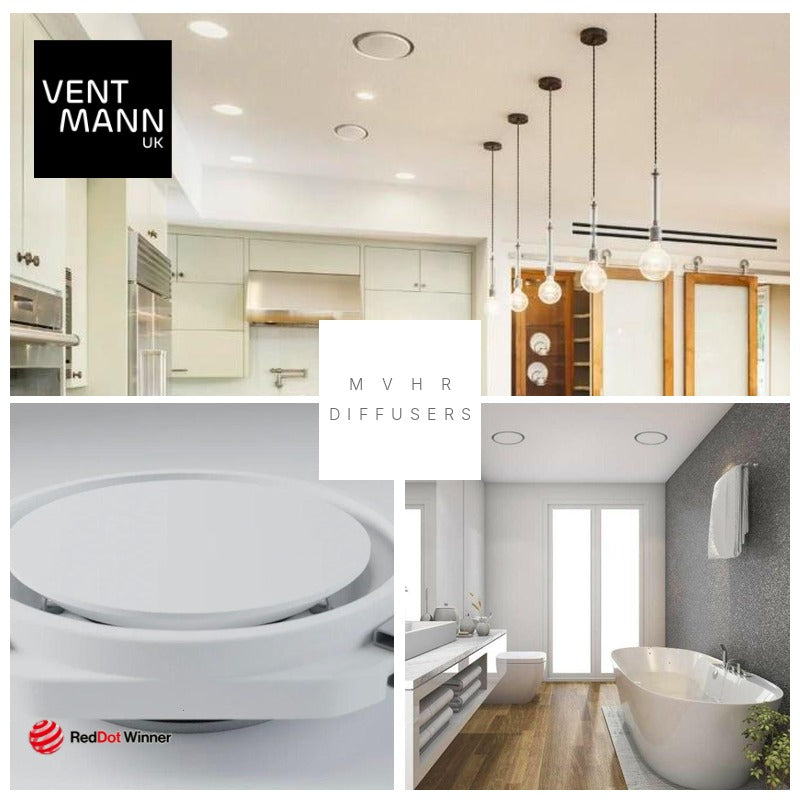
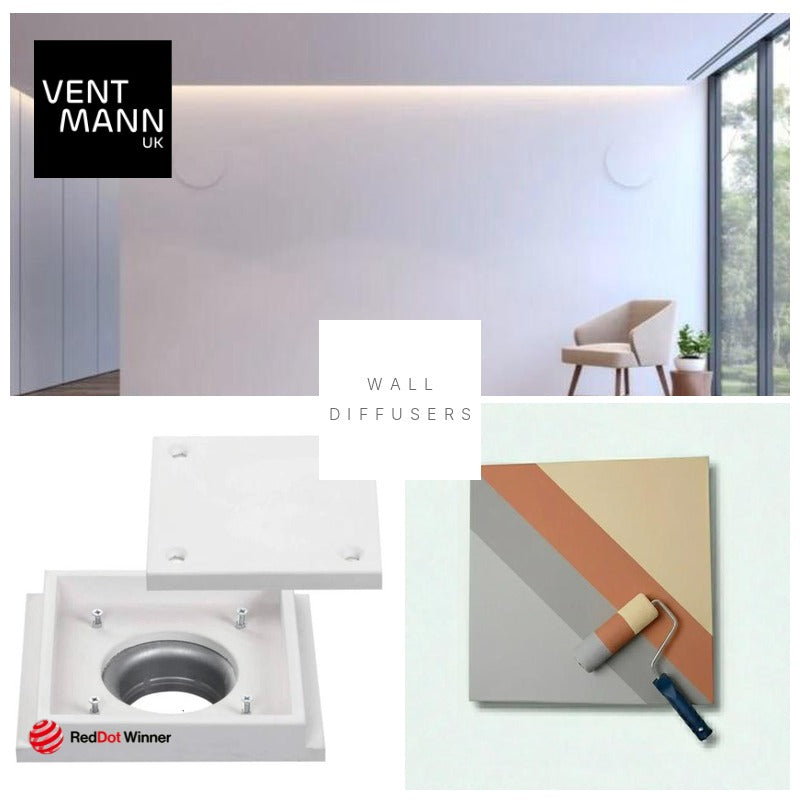
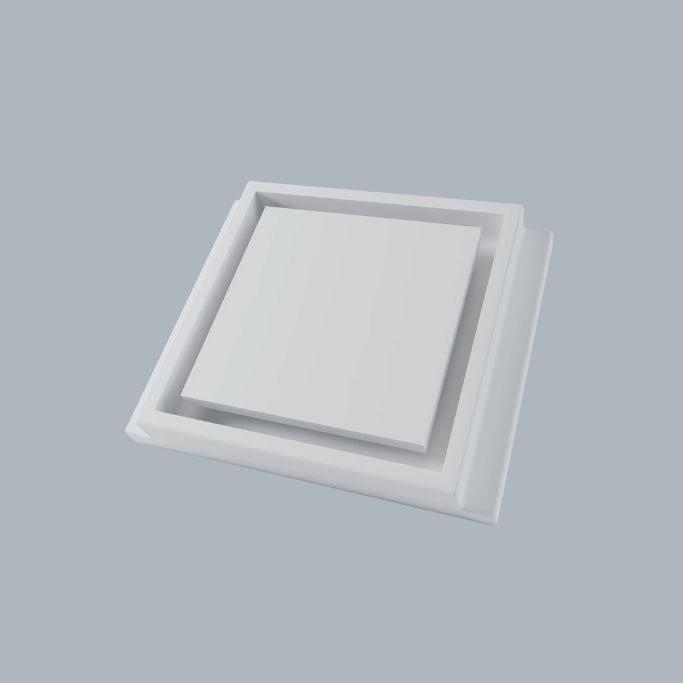
Plaster-in gypsum terminals for MVHR supply and extract. See the Performance Circle range.
Mechanical ventilation with heat recovery has quietly become the lungs of the modern British home. As building regulations push airtightness ever higher, MVHR has moved from Passivhaus exotica to standard specification on new builds and deep retrofits alike. The engineering is quietly impressive: a heat exchanger tucked into a loft or utility cupboard, recovering most of the warmth from stale extract air and handing it back to the fresh supply, running silently around the clock, every day of the year.
And yet, on most projects, the only part of that four-figure system anyone will ever see is a white plastic valve that cost less than a sandwich.
The last-metre problem
Call it the last-metre problem. Months of design effort go into duct runs, silencers and commissioning flow rates, and then the terminal — the one visible handshake between the system and the room — is left to whatever the wholesaler had on the shelf. Plastic poppet valves sit proud of the plasterboard on a visible collar, discolour as the years pass, and drift out of their commissioned setting every time someone unscrews the cone to clean it. The ceiling gets a beautifully engineered ventilation system wearing the wrong shoes.
A terminal that becomes the ceiling
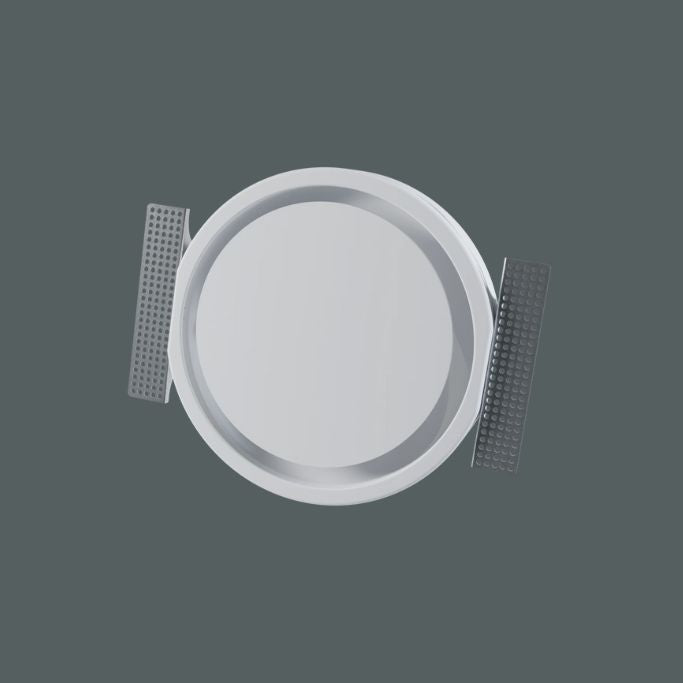
Ventmann’s Performance Circle diffusers approach the last metre from the opposite direction. Cast from a gypsum composite, they are plastered in frameless: the installer fixes the diffuser to the ceiling void, joints and skims the edge, and paints it with the rest of the ceiling. What remains is not a fitting on the ceiling but a crisp circular slot in it — the air arrives, and the architecture stays quiet. Spigot sizes from 100 mm to 200 mm connect directly to standard MVHR ducting, and the same body handles both supply and extract, so the valves in the bathroom can match the diffusers in the bedrooms.
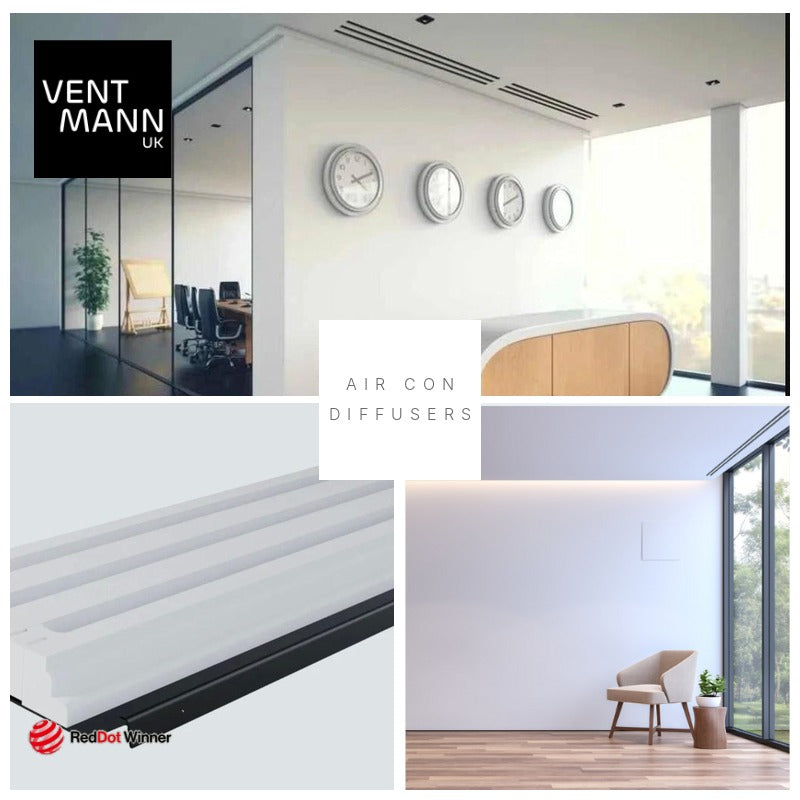
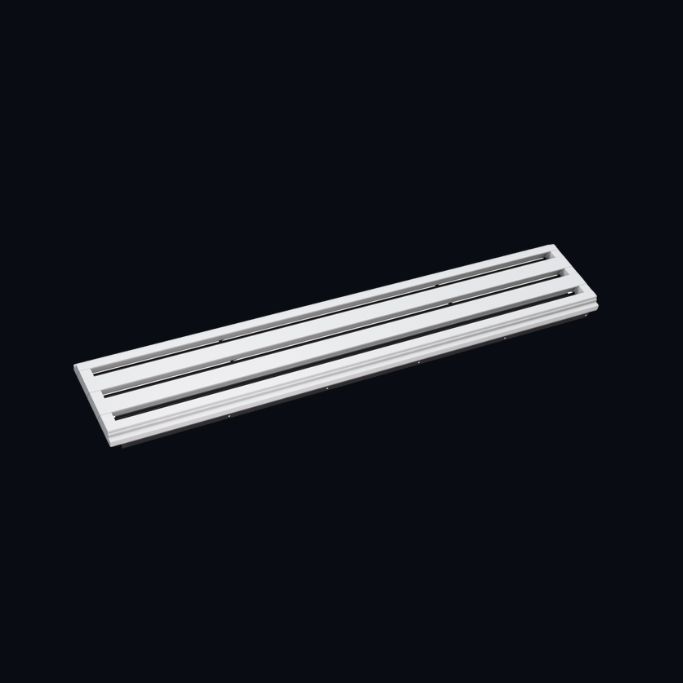
Where a room calls for a continuous line rather than a circle — along a window wall, down a hallway, washing a tall curtain of glass — the plaster-in Line diffusers and Performance Line diffusers do the same disappearing act in linear form, in one, two or three slots.
Why gypsum suits MVHR in particular
Extract rooms are the acid test. Kitchens and bathrooms send warm, humid air through the terminal all day; on a metal grille that moisture condenses, streaks and eventually stains the ceiling with the familiar dark halo. Gypsum behaves differently. The material does not sweat, which means no condensation, no mould ring and no dust shadow creeping outward from the vent. It is also Class A non-combustible, and because the face is ordinary paintable plaster, the diffuser is repainted with every redecoration instead of being replaced.
Specifying it
Ventmann UK supplies free airflow calculations to size diffusers against your MVHR design flow rates, and acoustic flexible ducting to keep the last metre as quiet as the rest of the system. Everything carries a 5-year warranty with next-business-day delivery across the UK.
Ventmann UK · ventmann.co.uk · sales@ventmann.co.uk · 01283 240025