


Linear Bar Grilles vs Linear Slot Diffusers: What's the Difference and Which Do You Need?
They look similar from across a room — a long, narrow opening in the ceiling — and they are specified for completely different reasons. A linear bar grille is a cover with bars; a linear slot diffuser is an air-distribution device. Picking the wrong one is the commonest reason a smart-looking linear ceiling ends up draughty or noisy. This article sets out the differences, when each is right, and where the frameless plaster-in slot fits in.
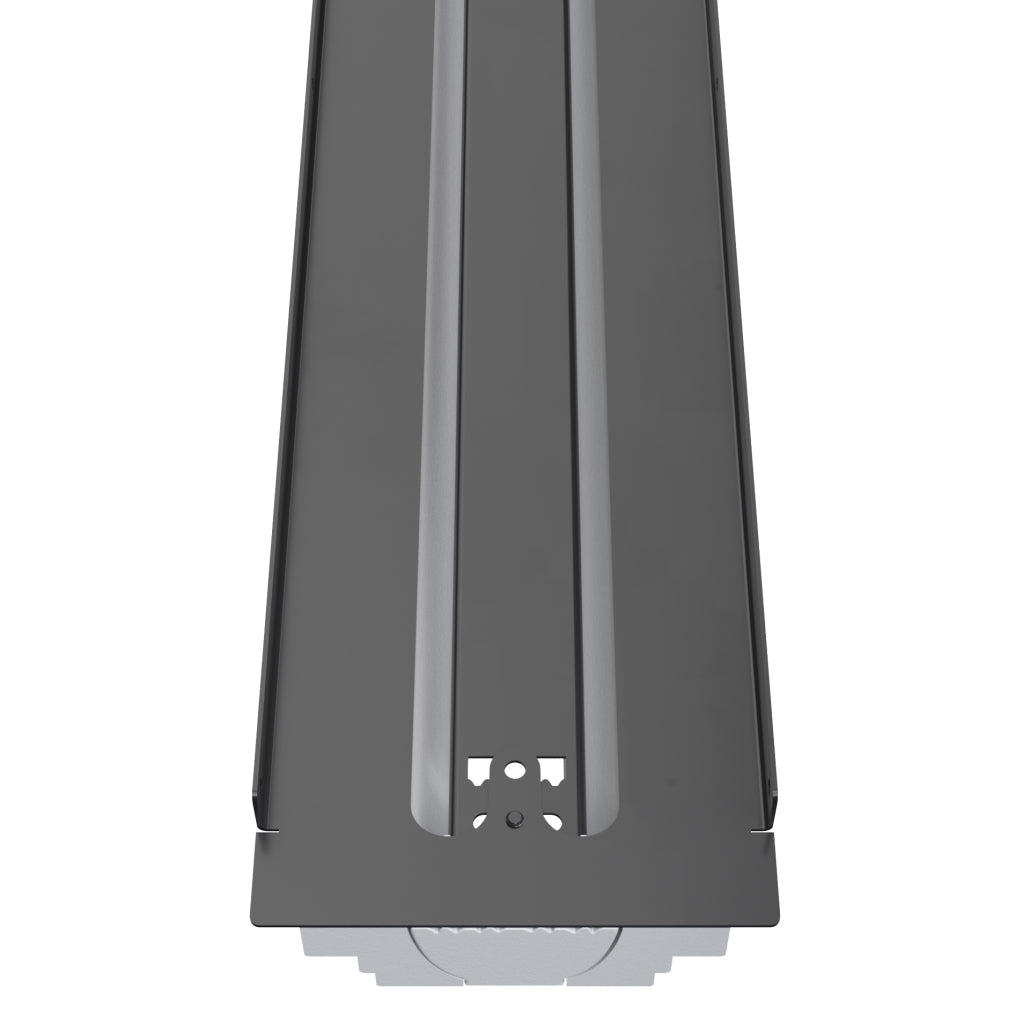
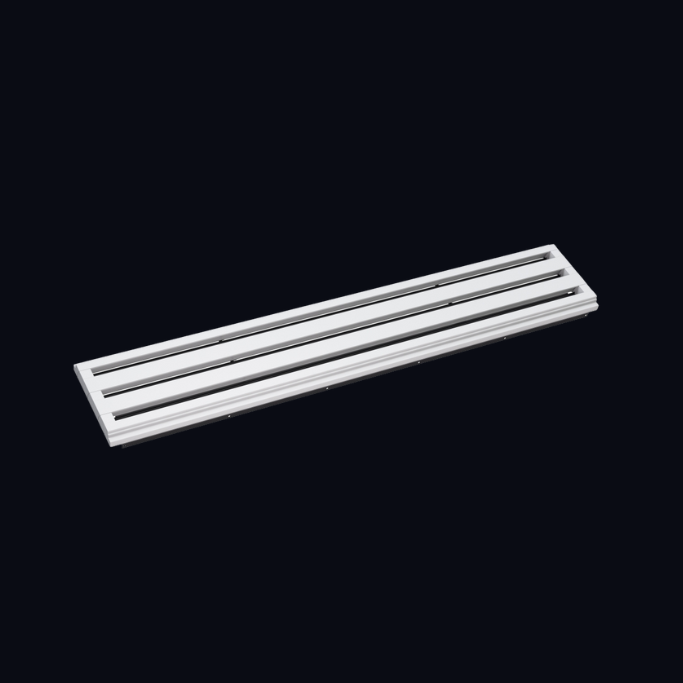
A single-slot frameless diffuser. Behind the slot is a profiled air path and a plenum — the parts a bar grille does not have.
What a linear bar grille is
An extruded aluminium frame with parallel bars, usually at 0° or 15°, fixed or occasionally adjustable. It is made to measure in nominal widths from about 100 to 300 mm and any length, and screwed or clipped into a ceiling, sill, bulkhead or floor trench. Air passes straight through between the bars with very little change of direction, so a bar grille gives the air a general heading but does not spread it. It is simple, robust and cheap per metre, and for return or extract air — where the air is leaving the room and nobody cares about its pattern — it is often the right product.
What a linear slot diffuser is
A narrow slot, or several, with a shaped air path behind each one. The slot accelerates the air and the profile, deflector or pattern controller decides where it goes: one way, two ways, straight down or — in a Coanda design — attached to the ceiling and spread across it. Slot diffusers are fed from a plenum box that turns the round duct jet into an even sheet along the whole length. They are more expensive per metre than a bar grille and they do a job the grille cannot: deliver supply air into an occupied room without a draught.
The differences that matter
| Linear bar grille | Linear slot diffuser | |
|---|---|---|
| Purpose | Cover an opening, give air a direction | Throw, spread and mix supply air |
| Air pattern | Straight through; fixed by bar angle | Engineered: one-way, two-way, vertical or Coanda |
| Best duty | Return, extract, transfer air | Supply air, especially cooling |
| Noise at supply velocities | Can be audible; sharp bar edges | Lower at the same flow with a profiled slot |
| Plenum | Often not needed | Always — it equalises the air along the slot |
| Face | Visible aluminium frame and bars | Metal frame, or frameless plaster-in gypsum |
| Standard sizes | 100–300 mm nominal widths, any length | 1–4 slots; frameless: 18 or 20 mm slots, 625–1250 mm lengths |
| Cost | Lower per metre | Higher per metre, plus plenum |
When a bar grille is right
- Return and extract openings where air pattern is irrelevant.
- Transfer grilles between rooms and over doors.
- Floor and sill trenches in front of glazing, where the grille has to take foot traffic.
- Budget commercial fit-outs in suspended ceilings where the look is utilitarian anyway.
When a slot diffuser is right
- Supply air into any room where people sit or sleep, and especially on cooling, where a bar grille drops cold air straight onto the occupant.
- Continuous architectural lines that should read as a detail of the ceiling rather than a piece of equipment.
- Perimeter supply along a window wall, washing the glass to counter downdraught.
- Anywhere noise matters: bedrooms, hotel rooms, consulting rooms, meeting rooms.
The frameless plaster-in slot
A third option removes the frame altogether. A gypsum body plasters into the plasterboard and is painted with it; inside is the metal slot insert and, above, the plenum. It behaves like a slot diffuser and looks like a shadow line. It is also the only linear terminal that can be finished in the ceiling colour on site.
Line Diffusers
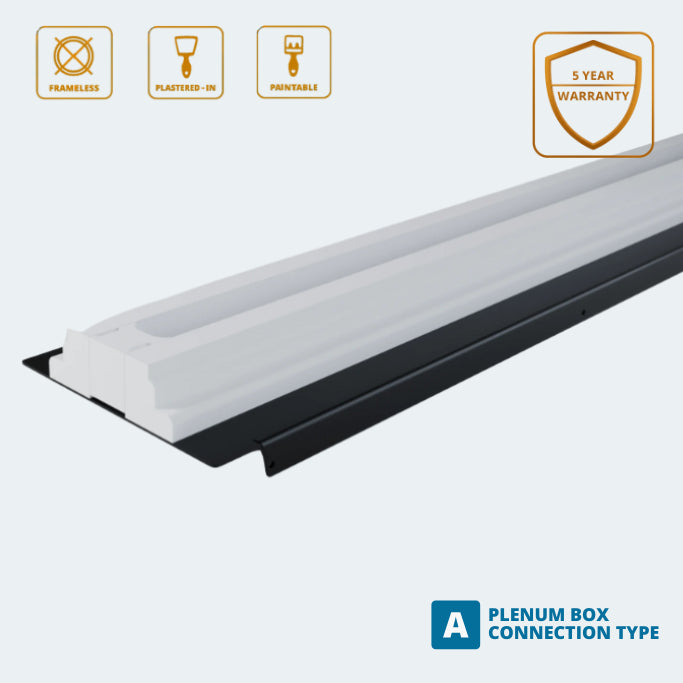
The standard Ventmann linear slot diffuser: a gypsum body with an 18 mm slot that plasters into the ceiling or wall and joins end to end for continuous runs. Supplied white and painted with the surface, so the only thing left on view is the slot.
- Slots 1, 2 or 3
- Lengths 625, 1000 and 1250 mm — joins end to end
- Slot width 18 mm
- Material Gypsum, supplied white, fully paintable
- Mounting Plasterboard ceiling or wall, plaster-in
- Duty Supply or extract
- Price From £125 excl. VAT
Performance Line Diffusers
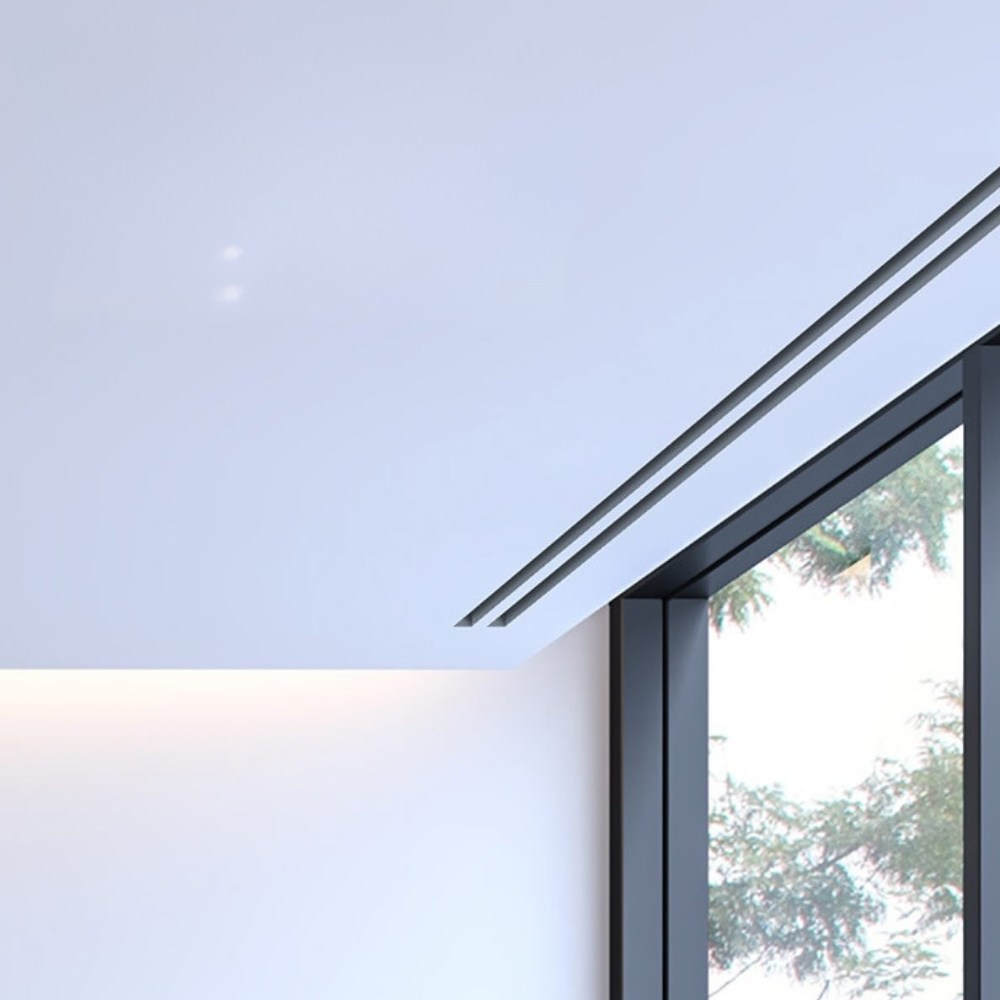
The higher-performance linear slot. A wider Coanda-profiled slot with an adjustable deflector, so the air attaches to the ceiling and spreads across it instead of dropping into the room — the slot to specify where the duty per metre is higher or the room is occupied directly underneath.
- Slots 1, 2 or 3
- Lengths 625, 1000 and 1250 mm
- Air pattern Coanda — attached to the ceiling or wall
- Deflector Included; perforated option available
- Material Gypsum, supplied white, fully paintable
- Price From £148.11 excl. VAT
Can one slot do both? Yes. A frameless slot run can supply at one end of a room and extract at the other, fed from separate plenums, with no visible difference along the length — which is how a single architectural line serves a whole room.
Standard sizes, side by side
| Linear bar grille | Frameless linear slot diffuser | |
|---|---|---|
| Width | 100, 150, 200, 250, 300 mm nominal | 1, 2 or 3 slots of 18 mm (Line) or 20 mm (Performance Line) |
| Length | Made to measure, typically up to 2 m per section | 625, 1000, 1250 mm — joined end to end; visible length trimmed with magnetic end caps |
| Corners | Mitred to order | 90° corner pieces in both slot widths |
| Connection | Open back or plenum | Plenum box with 75–200 mm knock-outs |
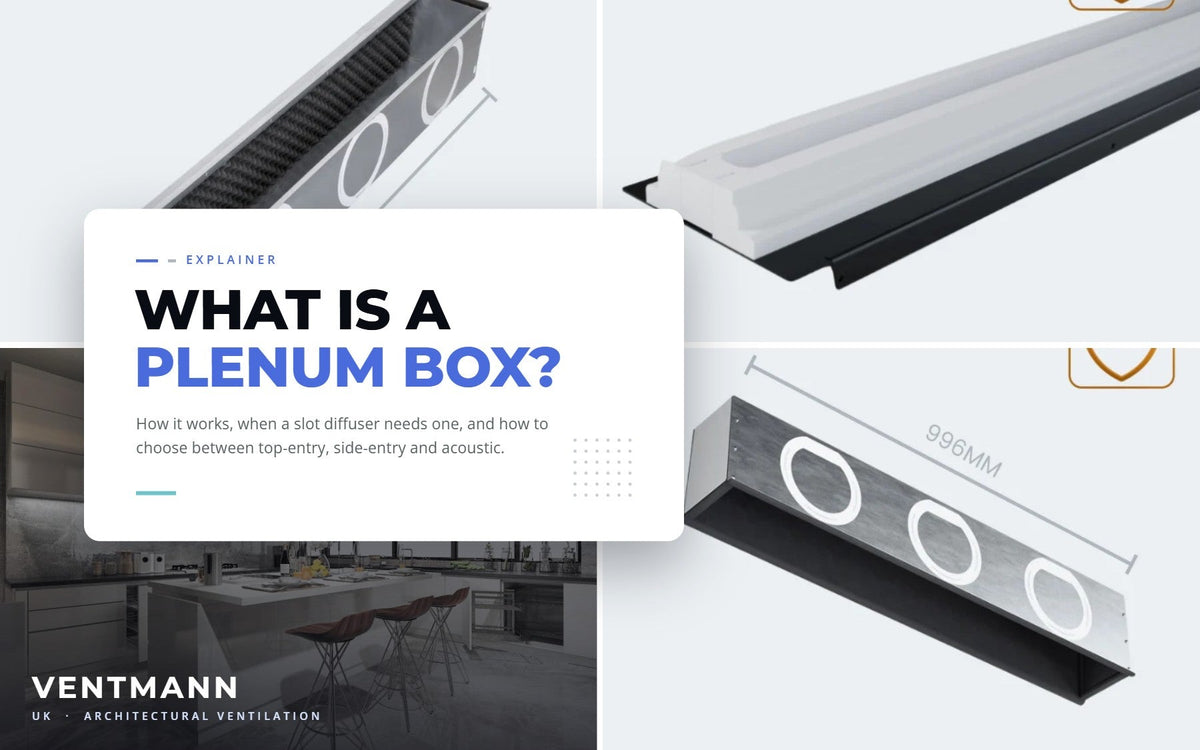
A frameless slot with its plenum: the part that makes it a diffuser rather than a grille.
Registers, air valves and the rest of the vocabulary
Two more terms turn up in the same searches. A register is a grille with a built-in damper, common in North American warm-air systems and occasionally in UK heating installations; the damper lets the occupant close it, which is exactly what you do not want on a balanced MVHR system. An air valve is the small round plastic or metal terminal supplied with most MVHR units, adjusted by screwing the centre cone in or out. Both are terminals; neither is a diffuser in the engineered sense.
Frequently asked questions
What is the difference between a linear bar grille and a linear slot diffuser?
A bar grille is a frame of bars that covers an opening and gives the air a direction; a slot diffuser has a shaped air path and a plenum behind narrow slots and is designed to throw, spread and mix supply air. Grilles suit return air; diffusers suit supply air.
What are the standard sizes of linear grilles?
Bar grilles: nominal widths of 100–300 mm and made-to-measure lengths. Frameless slot diffusers: 1–3 slots of 18 or 20 mm in 625, 1000 and 1250 mm lengths, joined for longer runs.
Is a diffuser better than a grille?
For supply air into an occupied room, yes — it is quieter at the same flow and does not drop a jet on the occupant. For return or extract air a grille is adequate and cheaper.
What is a register?
A grille with an integral damper. Useful where occupants are meant to control the outlet; unhelpful on balanced ventilation systems where closing one outlet unbalances the others.
Can a slot diffuser be used for return air?
Yes, and on frameless systems it usually is, so that supply and extract openings match.
Do slot diffusers need a plenum box?
Yes. Without a plenum the air leaves the slot only where the duct enters. The plenum equalises the pressure along the length so the whole slot works.
Not sure which terminal you need?
Send us your floor plan and we will run the airflow calculations, size every diffuser, plenum and damper, and get the kit to you with next-day UK delivery — free.
Call 01283 240025 · Email sales@ventmann.co.uk
Shop linear slot diffusersGet Free Airflow Calculations