

MVHR Explained: How Mechanical Ventilation with Heat Recovery Works
MVHR — mechanical ventilation with heat recovery — is the quiet machine behind most new energy-efficient homes in the UK. It replaces trickle vents and noisy extract fans with one continuous, balanced system that brings in fresh, filtered air and keeps most of the heat you've already paid for. Here's how it works, what it involves and what it's actually like to live with.
What MVHR actually does
In one sentence: MVHR removes stale, humid air from the rooms that create it, replaces it with fresh outdoor air in the rooms you live in, and transfers heat from the outgoing air to the incoming air on the way past. The two airstreams never mix — they pass either side of thin plates inside a heat exchanger, so warmth crosses over while moisture, odours and pollutants leave the building.
Because it runs continuously at low speed, MVHR keeps air quality steady around the clock rather than in bursts. That steadiness is the point: no condensation on cold mornings, no stuffy bedrooms overnight, no window-opening ritual in January.
The four airstreams
Every MVHR unit handles four connections. It helps to know them by name:
- Outdoor air — drawn in from outside through a wall or roof terminal.
- Supply air — that same air, filtered and warmed by the heat exchanger, delivered to living rooms and bedrooms.
- Extract air — warm, moist air pulled from kitchens, bathrooms, en-suites and utility rooms.
- Exhaust air — the extract air, now cooled after giving up its heat, discharged outside.
Which rooms get what
The layout follows a simple logic. Supply goes to habitable rooms — living rooms, dining areas, bedrooms and studies. Extract comes from wet or odorous rooms — kitchens, bathrooms, WCs and utility rooms. Air migrates between them through hallways and door undercuts (or transfer grilles), so the whole home is ventilated by one gentle, continuous flow.
What's in a system
- The unit — fans, heat exchanger, filters and controls in one cabinet, usually in a utility cupboard or loft.
- Ductwork — rigid or semi-rigid runs to each room, ideally short and direct.
- Plenum boxes — connect each duct to its terminal, even out pressure and absorb noise. See our acoustic plenum boxes.
- Terminals (diffusers) — where air enters and leaves each room, and the only part you'll see.
- Controls — a background setting, a boost for showers and cooking, often humidity or CO₂ sensing, and a summer bypass.
Living with MVHR: running costs and maintenance
Modern units use efficient EC fans and typically draw tens of watts at normal background speed — in the region of a few LED lamps. In return they recover most of the heat in the outgoing air; our heat recovery guide works through the numbers.
Maintenance is light, but it isn't optional:
- Filters — check every few months and replace typically every 6–12 months; more often near busy roads or after building work.
- Terminals — vacuum or wipe the slots during routine cleaning, and check they haven't been painted over after decorating.
- Annual check — condensate drain, fan performance and filter seals.
- Re-balance after changes — if rooms change use or terminals are moved, have the airflows re-commissioned.
Three MVHR myths
"You can't open the windows."
You can. MVHR doesn't need sealed windows — it just means you no longer have to open them to get fresh air.
"It's air conditioning."
It isn't. MVHR exchanges air and recovers heat; it doesn't actively cool. Most units include a summer bypass that brings in cooler night air without warming it, which helps in hot spells.
"It's noisy."
A well-designed system is close to silent. Noise usually points to undersized ducts, a unit fixed to a lightweight wall, or terminals without acoustic plenums.
The part you'll actually see
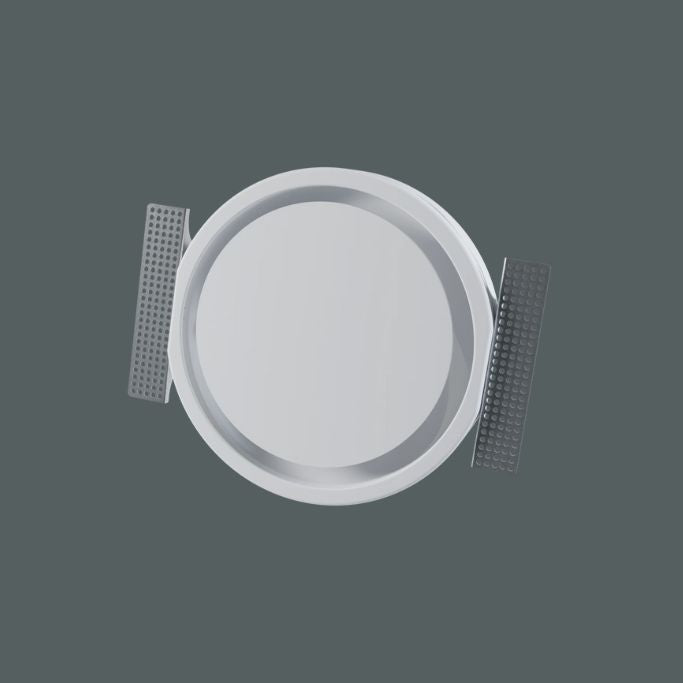
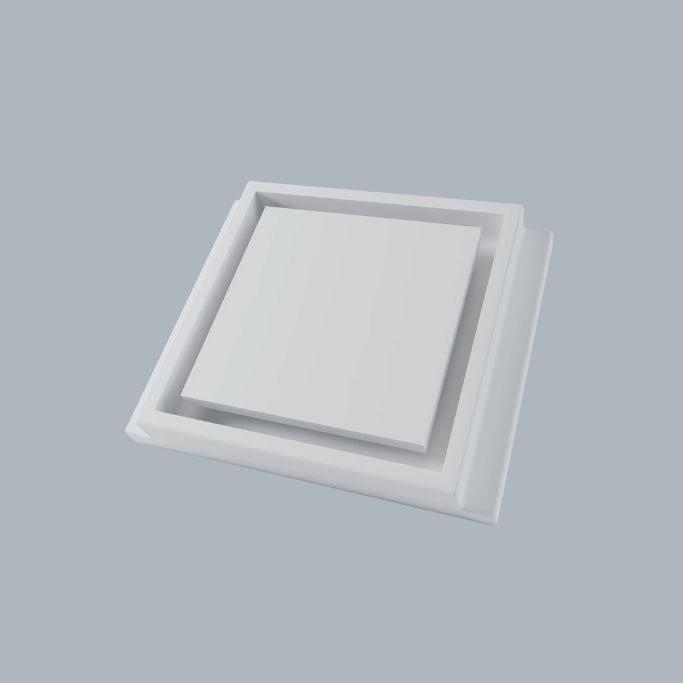
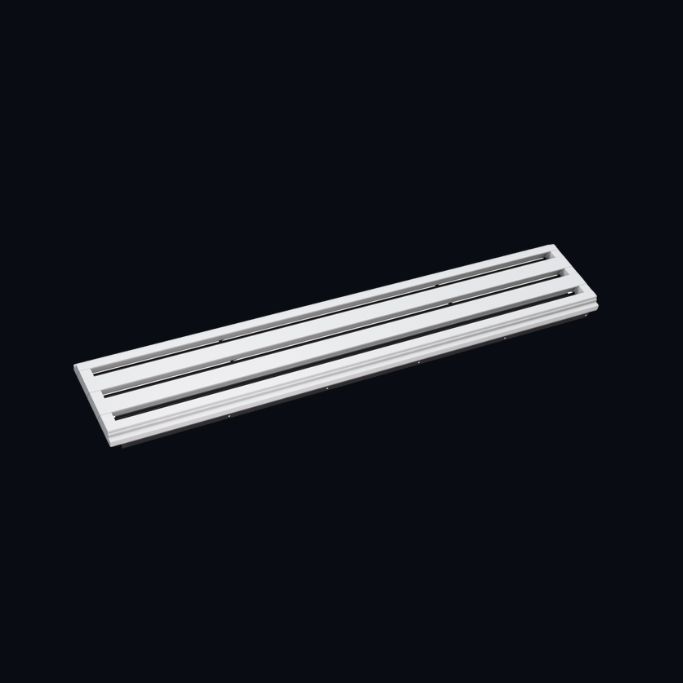
Most of an MVHR system disappears into ceilings and cupboards. The terminals don't — there's one or two in nearly every room, usually in the ceiling. Standard plastic valves work, but they leave a visible ring in each room. Frameless plaster-in diffusers made from gypsum are skimmed into the ceiling and painted with it, so only a clean slot remains.
Choosing terminals: the Performance Circle connects to 100–200 mm ducts and handles up to 300 m³/h; Line diffusers create continuous linear slots. Not sure what you need? The Product Selector filters by airflow, noise and pressure drop.
Quick answers
Is MVHR worth it in an older house?
It works best in airtight homes. In a draughty older house, improve airtightness first — otherwise much of the air leaks through gaps instead of passing the heat exchanger. Deep retrofits that tackle airtightness are good candidates.
How many terminals does a house need?
Usually one per room, sized from airflow calculations; large open-plan spaces may need two or more. We'll calculate this for free from your plans.
Does MVHR help with allergies?
Incoming air passes through filters, and finer filter grades can reduce pollen and fine particles indoors — a benefit many owners notice in spring and summer.
Planning MVHR? Start with the airflow.
Send us your plans and we'll size every terminal on the system — free airflow calculations, published technical data, Revit BIM objects and frameless gypsum diffusers delivered next-day across the UK.
Get Free Airflow Calculations Open the Product Selector
Call 01283 240025 · Email sales@ventmann.co.uk