



Invisible Air Vents: Flush, Trimless and Concealed Diffusers Explained

"Invisible air vent" is a promise, not a product category, and several very different products make it. Some are plastic valves painted to match; some are metal grilles set flush behind a plaster bead; some are gypsum terminals that become part of the ceiling. This guide explains what flush, trimless, concealed and hidden actually mean when applied to a vent, how each is detailed on site, and how to get a ceiling where the ventilation genuinely cannot be seen.

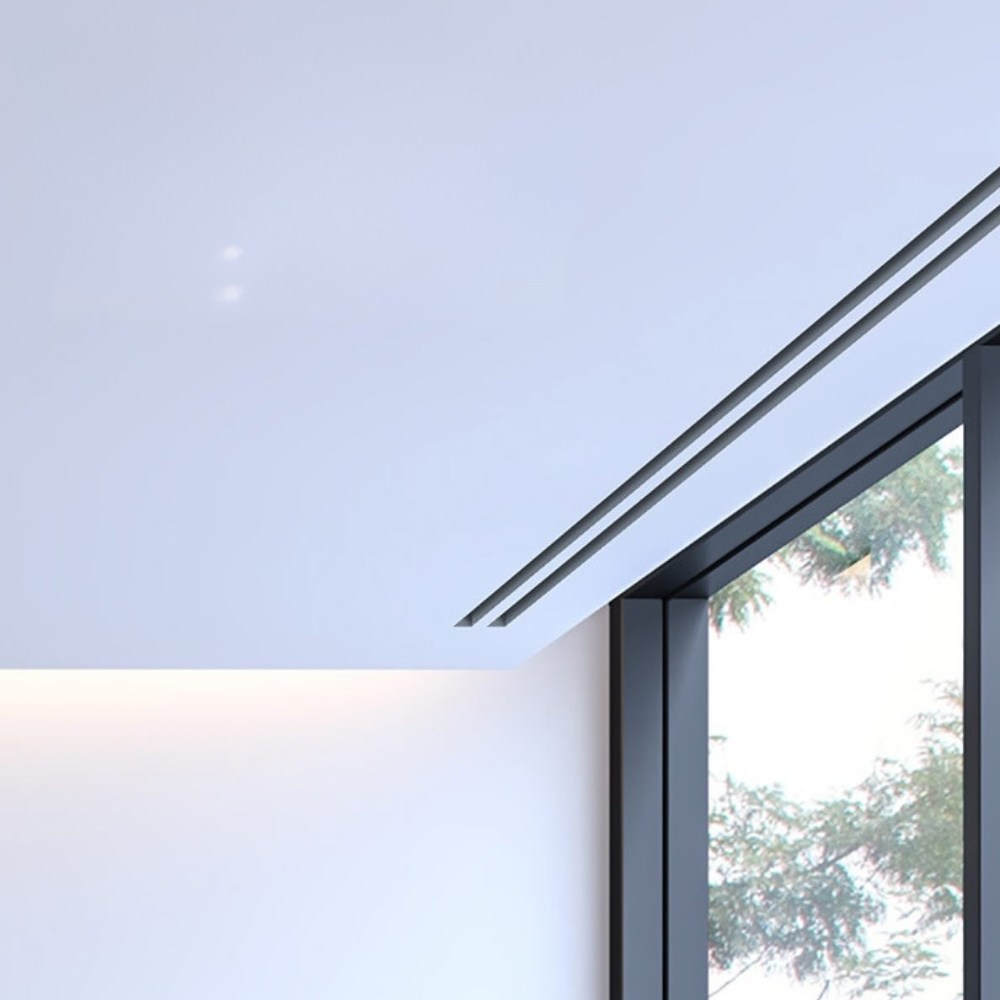
A concealed slot in a plastered ceiling. The only evidence of the ventilation is a shadow line.
What the words mean
| Term | What it usually means | How it is achieved |
|---|---|---|
| Flush | The face sits level with the ceiling or wall, with no projecting flange | Recessed frame behind the board, or a plaster-in body |
| Trimless | No visible trim or bead around the opening | Plaster-in body skimmed into the board; the architect's word for frameless |
| Frameless | No frame at all — the opening is cut into the surface itself | Gypsum body that bonds to the plasterboard |
| Concealed / hidden | The terminal is not identifiable as a vent | Slots in shadow gaps, bulkheads, coffers and behind pelmets; painted gypsum terminals |
| Invisible | Marketing shorthand for any of the above | Usually a paintable frameless terminal |
How a flush vent is made flush
A conventional vent projects because its flange sits on the surface. There are two ways to lose the projection. The first is to recess a metal frame behind the board and plaster up to a bead, which leaves a hairline and a lot of site work. The second is to make the terminal out of the same material as the ceiling: a gypsum body is let into the board, its flange skimmed over with jointing compound, and the whole thing painted. The second route is quicker, has no bead to crack, and is the one used for the Ventmann range.
Line Diffusers
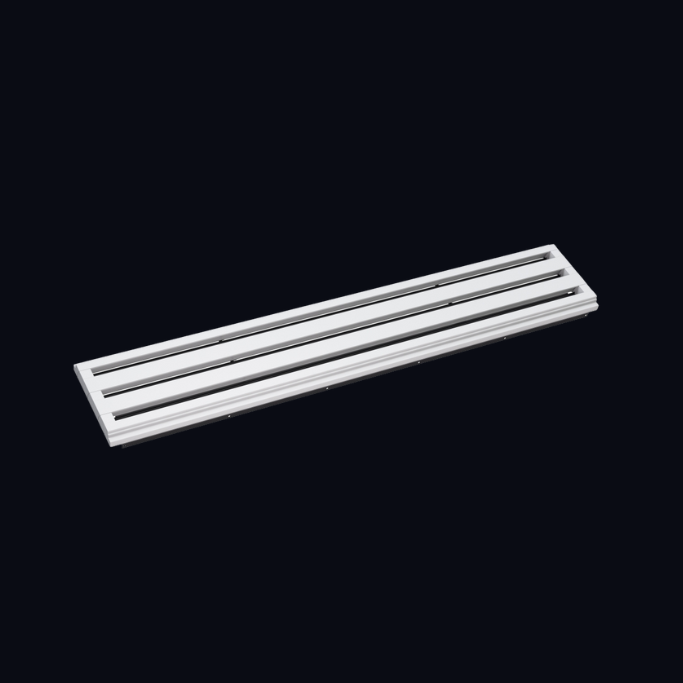
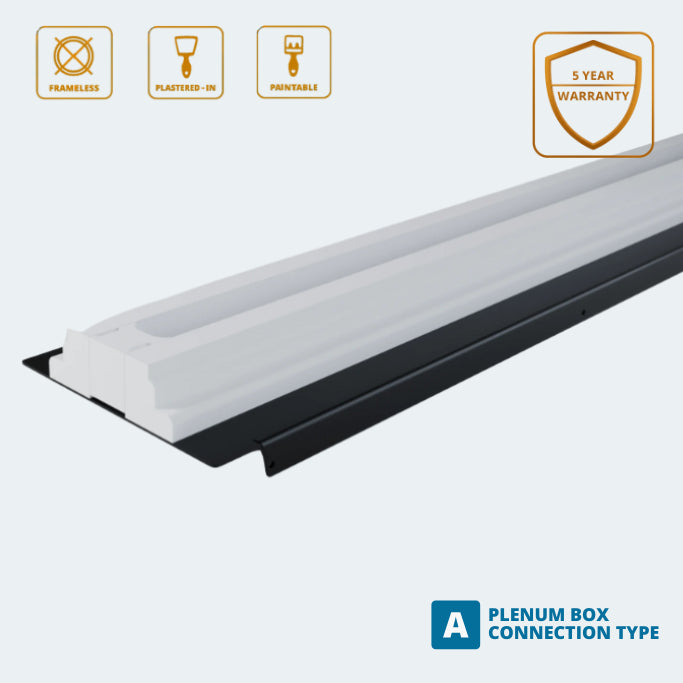
The standard Ventmann linear slot diffuser: a gypsum body with an 18 mm slot that plasters into the ceiling or wall and joins end to end for continuous runs. Supplied white and painted with the surface, so the only thing left on view is the slot.
- Slots 1, 2 or 3
- Lengths 625, 1000 and 1250 mm — joins end to end
- Slot width 18 mm
- Material Gypsum, supplied white, fully paintable
- Mounting Plasterboard ceiling or wall, plaster-in
- Duty Supply or extract
- Price From £125 excl. VAT

Performance Circle Diffusers
The circular frameless terminal. Curved internal geometry turns the supply air outwards along the surface (the Coanda effect), giving wide dispersal and almost no perceptible airflow directly below. Four spigot sizes cover everything from an MVHR bedroom branch to a cooled open-plan space.
- Shape Circular, frameless, plaster-in
- Slots 1 or 2
- Spigot sizes 100, 125, 160 and 200 mm
- Material Gypsum, supplied white, fully paintable
- Duty Supply or extract, heating and cooling
- Price From £86.65 excl. VAT
Hidden linear diffusers: where to put the slot
A linear slot is the easiest terminal to hide because a line is something ceilings already have. The usual places:
- In a shadow gap at the wall-to-ceiling junction, where the slot reads as part of the gap.
- On the vertical face of a bulkhead or the step in a split-level ceiling, out of the normal sightline.
- Alongside a lighting detail — a slot and a linear light share the same line.
- Inside a coffer, washing the raised field.
- Behind a curtain pelmet, supplying down the glazing.
Side-entry plenums make most of these possible in shallow voids; the fifth facade article covers the design thinking.

A slot in a bedroom ceiling, reading as a shadow line rather than a vent.
Hidden air conditioning vents
Ducted air conditioning is the system most often asked to be invisible, and the one where the detail matters most, because the supply air is cold. A plain hidden slot that drops cold air into the room has solved the appearance problem and created a comfort one. Use the Coanda version over occupied zones so the hidden slot also keeps the air on the ceiling; the AC grilles and ceiling vents guide has the layouts.
Performance Line Diffusers
The higher-performance linear slot. A wider Coanda-profiled slot with an adjustable deflector, so the air attaches to the ceiling and spreads across it instead of dropping into the room — the slot to specify where the duty per metre is higher or the room is occupied directly underneath.
- Slots 1, 2 or 3
- Lengths 625, 1000 and 1250 mm
- Air pattern Coanda — attached to the ceiling or wall
- Deflector Included; perforated option available
- Material Gypsum, supplied white, fully paintable
- Price From £148.11 excl. VAT
Flush wall vents
Walls can be made flush in the same way. A frameless round or square terminal plasters into a plasterboard wall and throws the air along the surface; a slot in a wall works from a side-entry plenum. Both are the answer in loft rooms, apartments and retrofits with no ceiling void, and both disappear under the wall colour.
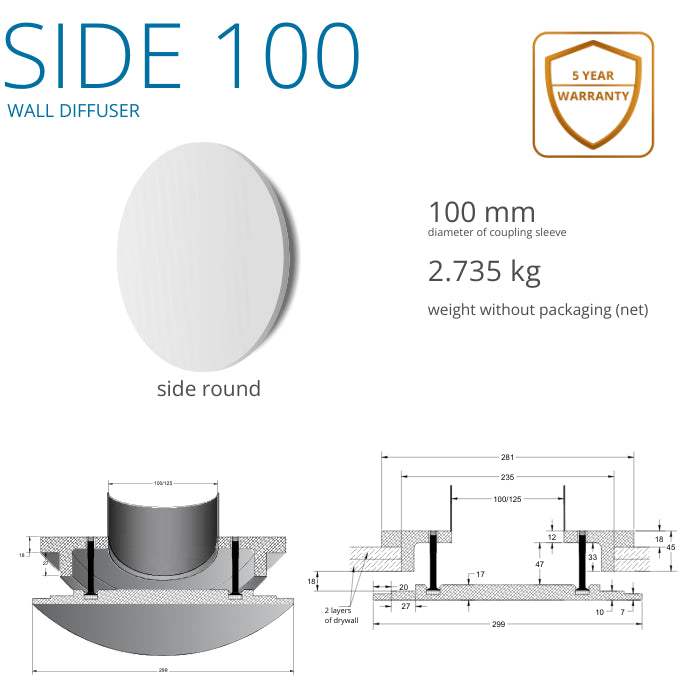
Side Round Diffuser
For rooms with no ceiling void. A frameless round terminal that plasters into a wall (or ceiling) and throws air along the surface, with an adjustable gap height to change the air speed. Five spigot sizes up to 250 mm.
- Spigot sizes 100, 125, 160, 200 and 250 mm
- Adjustment Gap height sets the airflow speed
- Mounting Wall or ceiling, plaster-in
- Material Gypsum, supplied white, fully paintable
- Price From £122.37 excl. VAT
How to hide an existing air vent
The honest answer: you cannot plaster over a plastic or metal vent, and a decorative cover is still a cover. On a refurbishment the vent can be replaced with a plaster-in terminal at the same duct position — cut the opening to the new body, fix, skim and paint — which is the one route that removes the vent from view rather than dressing it. On a repaint it is a small addition to the plasterer's scope.
What is left on view? With a slot, the slot itself — 18 or 20 mm wide, dark inside. With a round or square terminal, a shadow gap around the cap. Both are painted with the ceiling and read as architectural detail rather than equipment. Nothing is truly invisible; the point is that nothing looks like a vent.
Specifying a concealed terminal: checklist
- Plasterboard ceiling or wall — plaster-in terminals need a board to bond to.
- Void depth and duct route — decides top-entry or side-entry plenum for slots.
- Air pattern — Coanda over occupied zones, especially on cooling.
- Sequence — the terminal goes in before the skim coat; brief the plasterer and decorator.
- Colour — supplied white; painted last, with the surface.
- A sample — the quickest way to settle a client's doubts about "invisible".
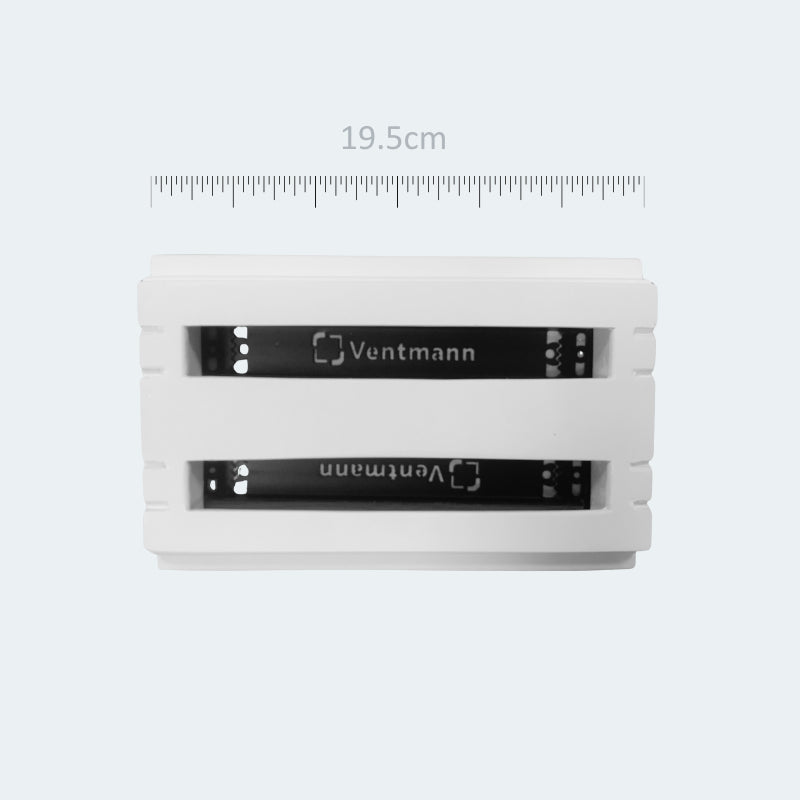
Order a sample first
The argument about whether a frameless gypsum terminal really vanishes into a ceiling is settled in about four seconds by holding one. Worth doing before a specification goes to a client.
- Use for Finish approval and client presentations
Frequently asked questions
What is a flush vent?
A vent whose face sits level with the surrounding ceiling or wall, with no projecting flange. Frameless plaster-in terminals are flush by construction; metal grilles can be recessed behind a plaster bead to the same effect.
How do flush vents work?
Exactly like any other terminal — supply or extract air passes through a slot or opening connected to a duct. The difference is entirely in how the body meets the surface.
How do I hide an air vent in a ceiling?
Replace it with a plaster-in gypsum terminal at the same duct position, skim the flange into the board and paint with the ceiling. Slots can be placed in shadow gaps, bulkheads or alongside lighting so they read as architectural lines.
What is a trimless diffuser?
An architect's term for a frameless diffuser: one with no trim, bead or frame around the opening, because the body itself is plastered into the surface.
Can hidden air vents be used with MVHR and air conditioning?
Yes. The same frameless terminals connect to MVHR branches (100–125 mm) and air-conditioning ducts (larger spigots, multi-slot runs). Use the Coanda versions over occupied zones on cooling.
Are invisible air vents more expensive?
Than a plastic valve, yes; than a designer metal grille recessed behind a plaster bead, usually not, once the site work is counted. Frameless gypsum terminals start at £67.74 excl. VAT.
Not sure which terminal you need?
Send us your floor plan and we will run the airflow calculations, size every diffuser, plenum and damper, and get the kit to you with next-day UK delivery — free.
Call 01283 240025 · Email sales@ventmann.co.uk
Shop frameless diffusersGet Free Airflow Calculations