


Ventmann Performance Coanda: The Frameless Gypsum Air Diffuser

Most ceiling diffusers aim air at the floor. That is fine in a corridor and a problem in a bedroom, because the person underneath feels every litre of it. A Coanda air diffuser solves the same airflow problem from a different direction: instead of throwing air down, it persuades the air to cling to the ceiling and spread outwards, so the room changes temperature without anyone noticing a draught.
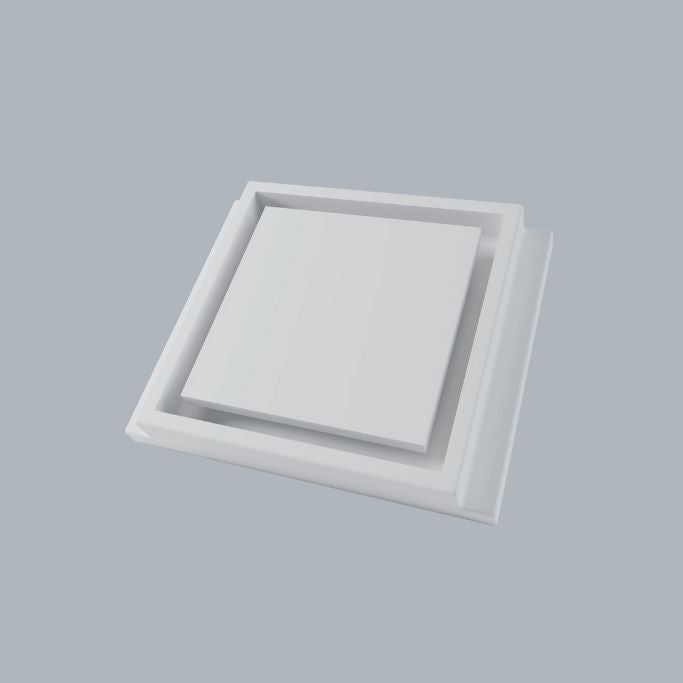
The Ventmann Performance Circle is that diffuser in frameless gypsum form — a circular, paintable air diffuser that plasters into a plasterboard ceiling or wall and leaves no frame, no flange and no visible fixings. It won a Red Dot design award for the idea, and it is backed by a 5-year warranty. This guide covers what the Coanda effect actually does, when to specify it instead of a conventional downward-throw diffuser, the full size range, and how the unit goes in.
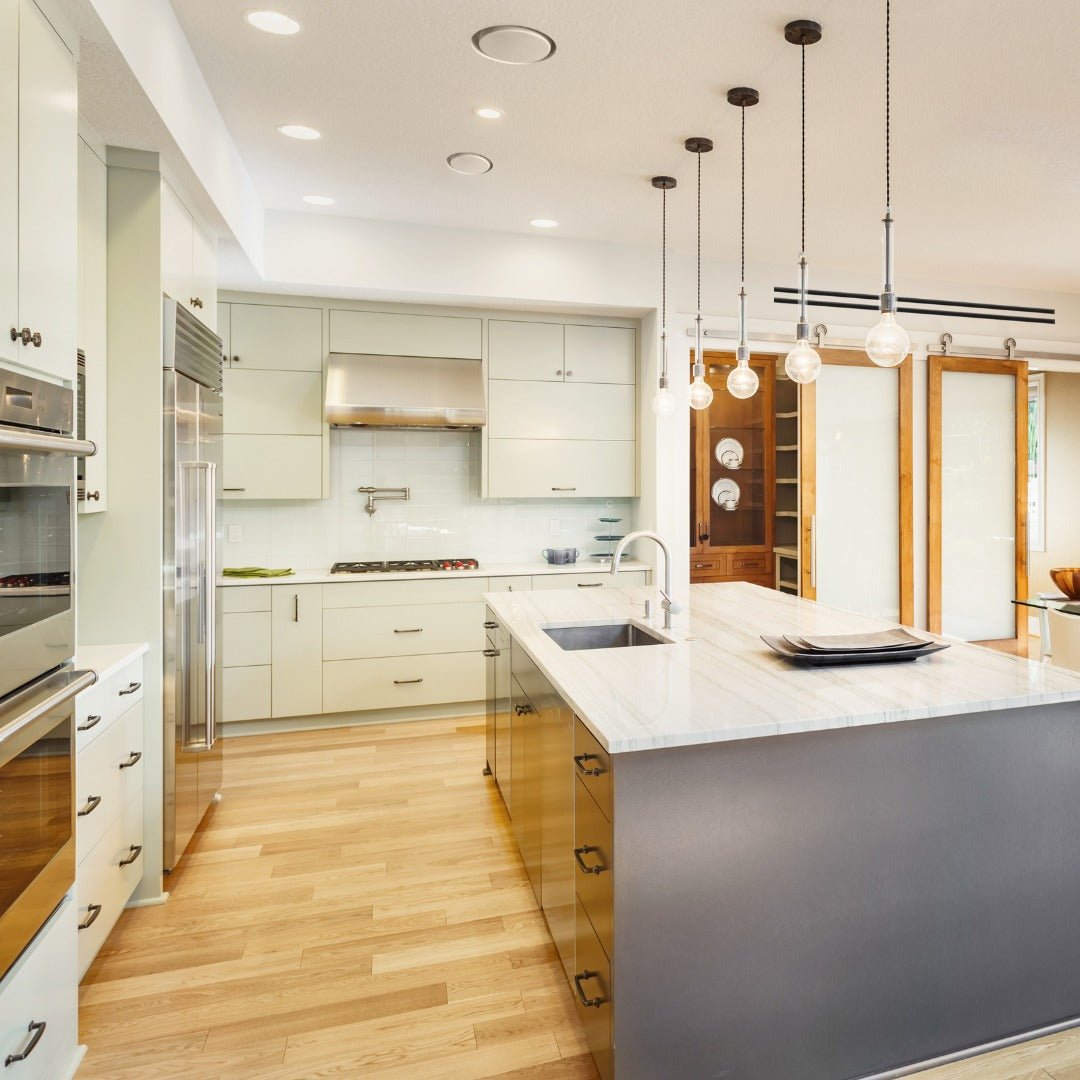
A Performance Circle in a plastered kitchen ceiling. Painted with the surface, it reads as a shadow line rather than a vent.
What the Coanda effect actually does in a ceiling
The Coanda effect is the tendency of a moving airstream to follow a nearby surface instead of continuing in a straight line. A low-pressure zone forms between the jet and the surface, and the jet bends towards it and stays attached. In a ventilation system that means supply air leaving the diffuser runs along the ceiling for several metres, mixing with room air as it goes, before descending gently at the walls.
Three things follow from that, and they are the reasons to specify a Coanda diffuser at all:
- No direct downward jet. Nobody sitting, sleeping or working under the diffuser is in the airstream. This is the whole point in bedrooms, hotel rooms and offices with fixed desk positions.
- Wider distribution from one point. Because the air spreads radially across the surface rather than dropping in a cone, a single terminal covers more floor area at the same flow rate.
- Better mixing before the air arrives. Cold supply air from a cooling system has distance to temper against room air, which is what stops the cold-draught complaints that follow comfort cooling into a small room.
Why it also runs quieter. Noise at a terminal comes from air being forced to change direction abruptly through a restricted face. A profile shaped to let the air turn gradually and stay attached to the surface does less violence to the airstream, so the same flow rate arrives with less turbulence and less hiss. Aerodynamic shape is an acoustic decision as much as a comfort one.
Coanda or straight-down? Choosing between the two
Conventional circular valves and diffusers throw air perpendicular to the surface they are mounted in. That is the right answer in plenty of places — it is simply the wrong answer in the rooms people actually sit still in.
| Conventional downward-throw diffuser | Coanda diffuser (Performance Circle) | |
|---|---|---|
| Air pattern | Vertical cone into the room | Radial, attached to the ceiling or wall surface |
| Under the terminal | Perceptible airflow directly below | Practically no perceptible movement |
| Best for | Corridors, lobbies, high ceilings, spot delivery | Bedrooms, living rooms, offices, hotel rooms, treatment rooms |
| Cooling air | Can arrive cold at head height | Tempers against room air before it descends |
| Ceiling height | Benefits from height to mix | Works in normal domestic ceiling heights |
If people spend long periods directly beneath the terminal, specify Coanda. If the diffuser sits over circulation space and you need air driven down into a tall volume, a conventional pattern is the simpler choice.
The Ventmann Performance Circle in detail
A circular frameless gypsum air diffuser built around the Coanda principle. The body is gypsum, it is bonded into the plasterboard with jointing compound, skimmed and painted with the rest of the ceiling, and the only thing left on view is the shadow gap around the cap.
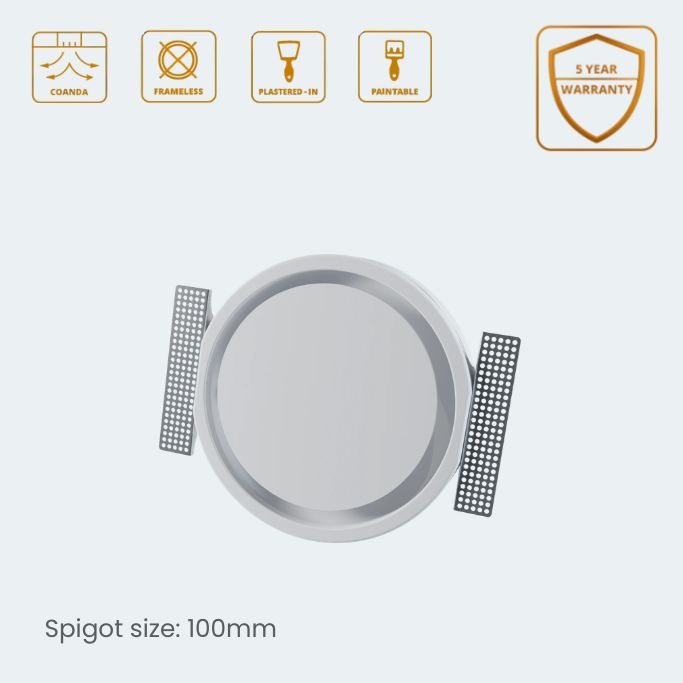
Performance Circle Diffuser
The circular Coanda terminal. Curved internal geometry turns the supply air outwards so it adheres to the surrounding surface, giving wide dispersal and markedly less perceptible airflow in the occupied zone. Supplied white and painted with standard emulsion or spray paint once installed.
- Shape Circular, frameless, plaster-in
- Slots 1 or 2
- Spigot sizes 100, 125, 160 and 200 mm
- Air pattern Coanda — radial along the surface
- Material Gypsum, supplied white, fully paintable
- Mounting Plasterboard ceiling or wall
- Duty Supply or extract, heating and cooling
Four spigot diameters, and a second slot on the larger two where the duty per terminal is higher. That range matters: a 100 mm connection is right for a bedroom branch on an MVHR system, but a living room on comfort cooling will often need 160 or 200 mm to deliver its share without pushing face velocity — and noise — up.
| Variant | Slots | Typical use |
|---|---|---|
| 100 mm spigot | 1 | Bedrooms, bathrooms, small rooms on MVHR branches |
| 125 mm spigot | 1 | Standard habitable rooms, hotel rooms, small offices |
| 160 mm spigot | 1 or 2 | Living rooms, open-plan areas, comfort cooling |
| 200 mm spigot | 1 or 2 | Higher duty per terminal, commercial and open-plan |
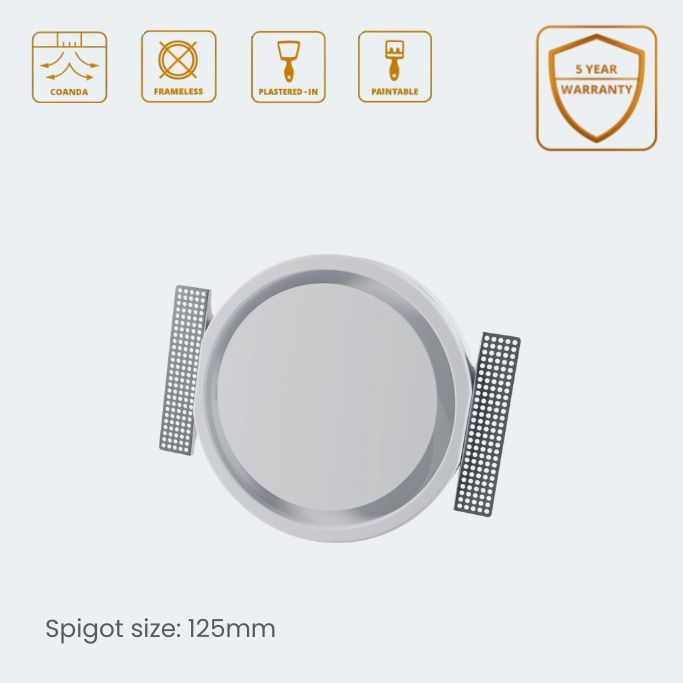
100 and 125 mm — the domestic sizes
The two sizes most MVHR and small ducted systems are designed around. One slot, winged body for fixing straight to the plasterboard, and a face small enough to disappear completely into a domestic ceiling once painted.
- Slots 1
- Fixing Side brackets to the plasterboard
- Suits Bedrooms, bathrooms, studies, hotel rooms
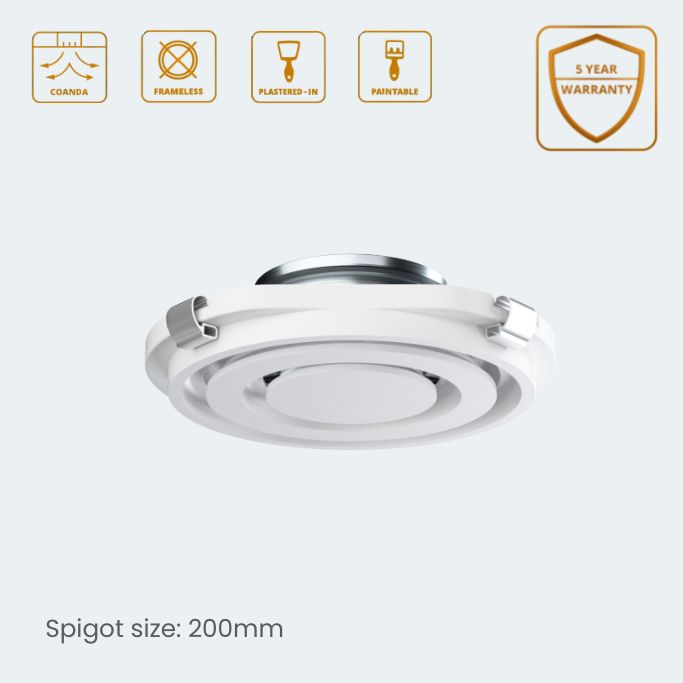
160 and 200 mm — higher duty per terminal
Where one terminal has to move more air, the second slot increases the free area without increasing face velocity, which is how you add flow without adding noise. The usual answer for living rooms and open-plan spaces on ducted cooling.
- Slots 1 or 2
- Benefit More flow at the same face velocity
- Suits Living rooms, open-plan, commercial
Gypsum, and why the body material decides the finish
A diffuser made of powder-coated aluminium is a component you fit to a ceiling. A diffuser made of gypsum is the ceiling. That distinction is the entire reason frameless terminals exist, and it has practical consequences beyond appearance:
- It takes the same finish. Jointing compound bonds to gypsum the way it bonds to plasterboard, so the joint between terminal and ceiling can be filled, sanded and painted out rather than detailed around.
- It takes the room's colour. Standard emulsion or spray paint, applied after installation — so a dark colour-drenched ceiling gets a dark diffuser, not a white rectangle.
- It behaves like the surface around it. No thermal bridge at a metal flange, no differential movement cracking a painted line, no powder-coat sheen catching the light differently from matt plaster.
- It is a sound material choice. Gypsum is non-combustible, non-toxic and recyclable, which matters on projects reporting embodied impacts.
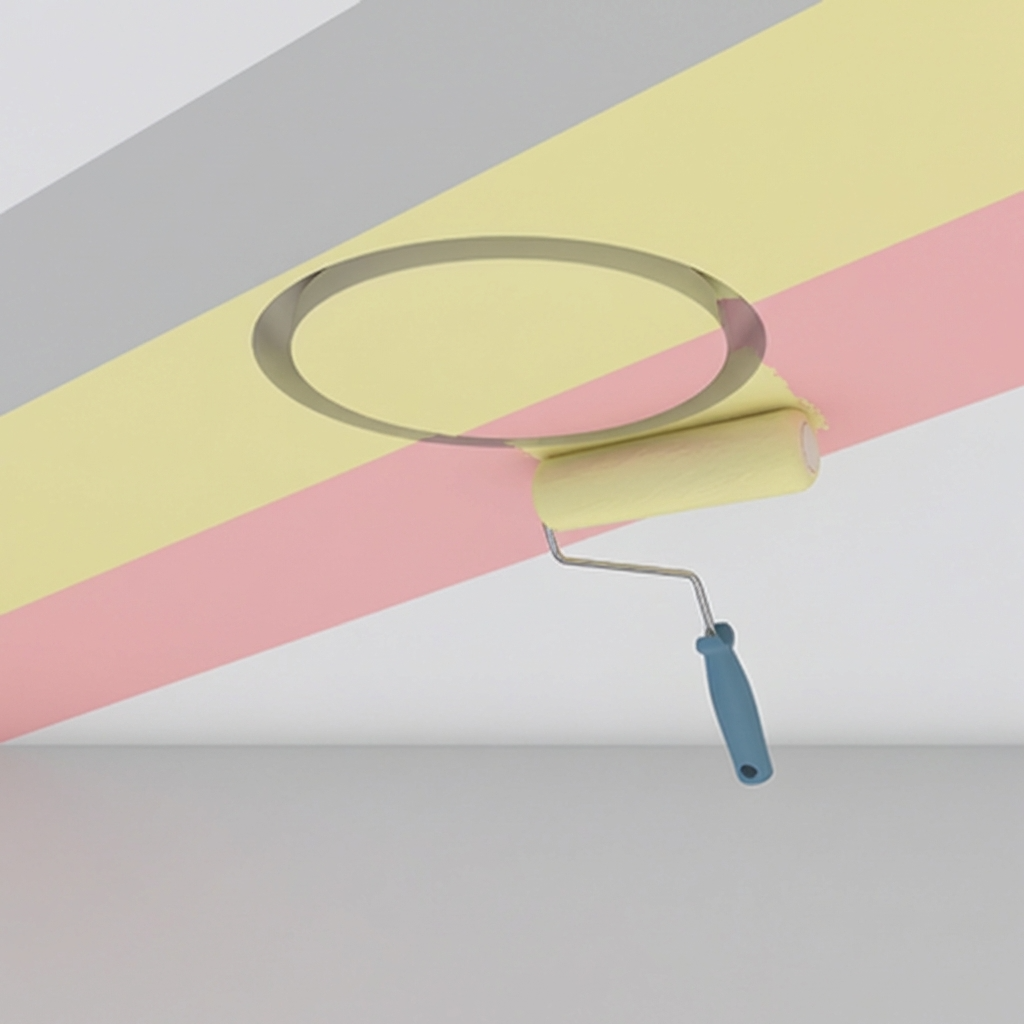
Supplied white, painted last. The diffuser takes whatever colour the ceiling takes.
Installation, step by step
The sequence below is Ventmann's documented method for the Performance Circle. It is a plasterer's job more than a ventilation engineer's, which is the point — the terminal is designed to be finished by the same trade that finishes the ceiling.
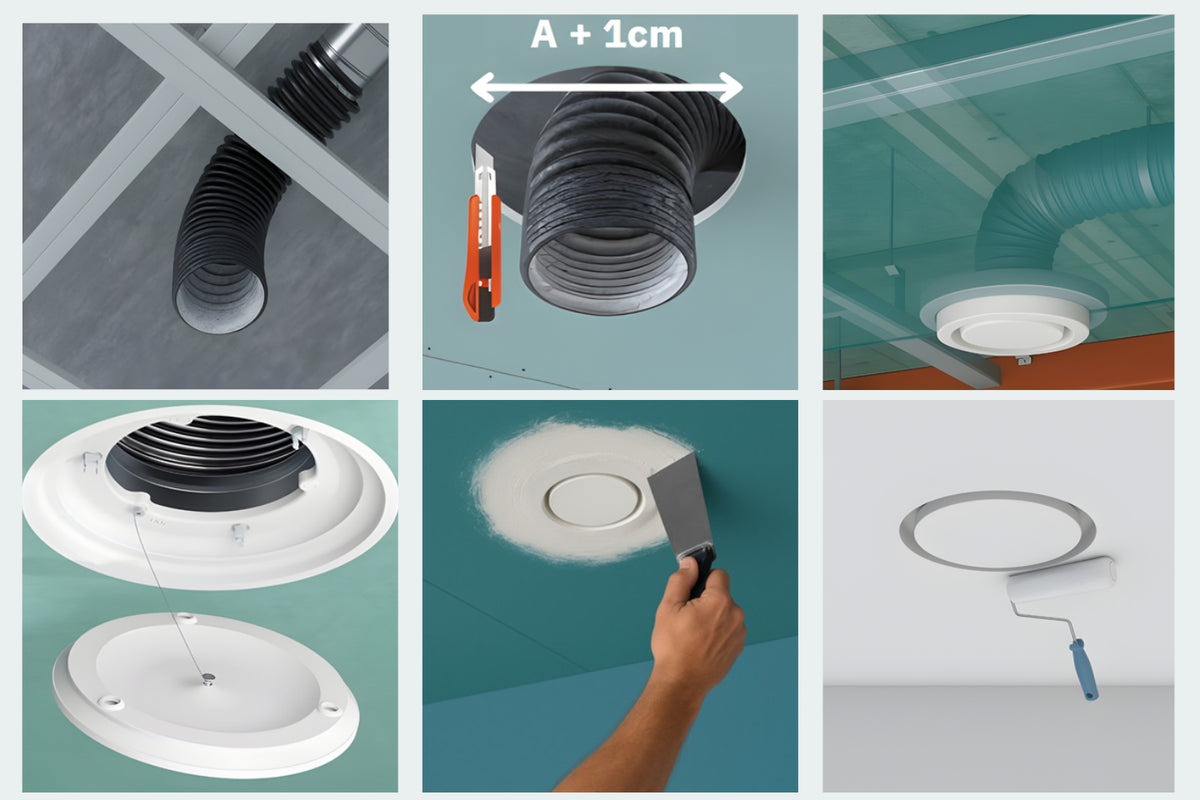
The six documented steps, from duct drop to final paint.
| Step | What happens |
|---|---|
| 1. Drop the duct | Bring the flexible duct down through the ceiling grid to the terminal position before the plasterboard goes on, leaving a generous bend radius. |
| 2. Cut the opening | Cut the plasterboard to the body diameter plus roughly 10 mm — the A + 1 cm rule on the drawing — so the body has room to sit square without fouling the board. |
| 3. Fix the body | Connect the duct to the spigot and fix the body through its side brackets directly to the plasterboard. |
| 4. Hang the cap | The cap is separate and carries a factory-fitted safety cable, so it cannot be dropped during finishing and cannot be lost on site. |
| 5. Skim the joint | Fill and feather the flange into the board with jointing compound, then sand flush. On new build, the plenum and diffuser are normally hung together and the board brought up to the diffuser face. |
| 6. Paint | Paint with the ceiling. Only the shadow gap around the cap remains on view. |
The one measurement that catches people out: the cut-out is not the spigot size. Work from the body diameter on the product drawing and add the 10 mm allowance. Cutting to the duct diameter leaves the body with nothing to bear on.
What goes behind it
The terminal is the visible fifth of the job. What sits upstream decides whether the room is quiet and whether it gets its design flow rate.
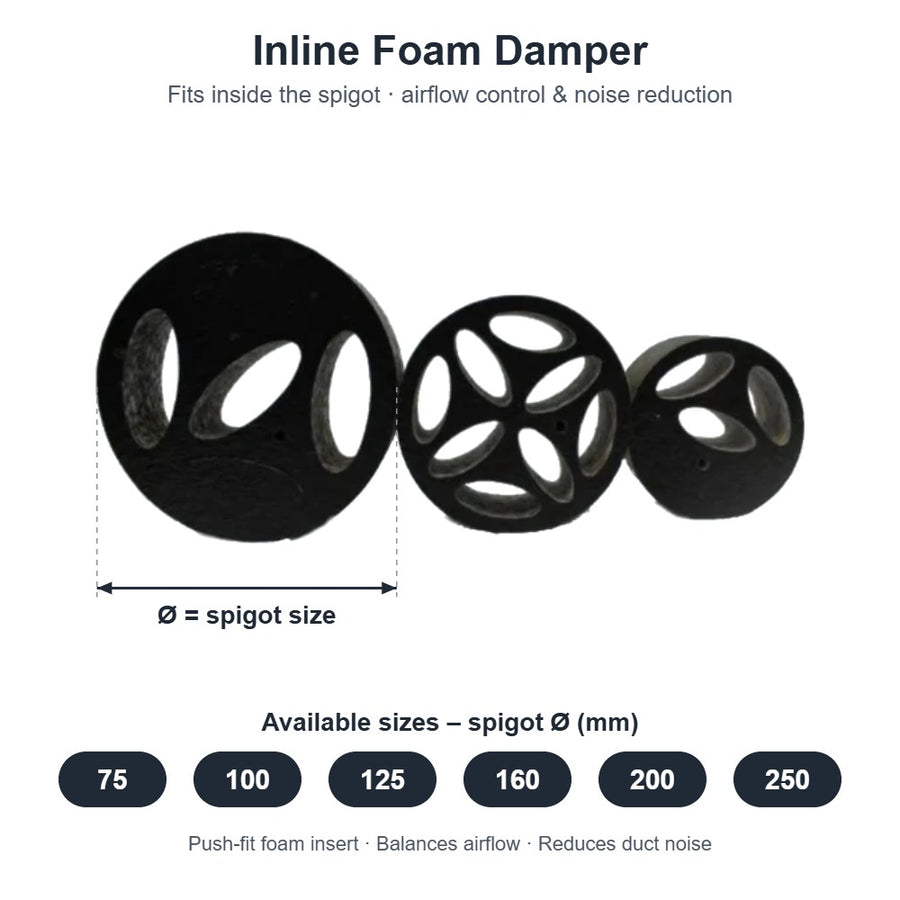
Inline Foam Damper
Every system has one branch that overblows. Trim it in the duct with a foam damper rather than by closing down the terminal — restricting the face is exactly what reintroduces the hiss the Coanda profile was shaped to avoid.
- Spigot sizes 75, 100, 125, 160, 200 and 250 mm
- Fit One per branch, in an accessible length of duct
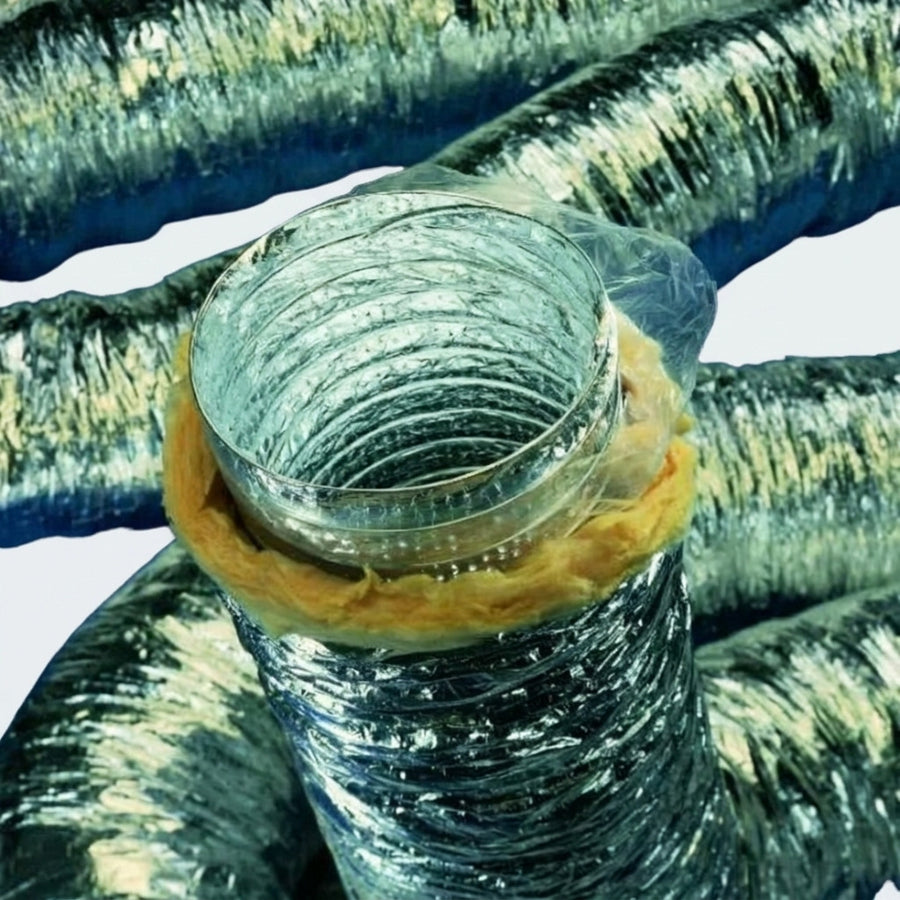
Acoustic Aluminium Flexible Ducting
For the last run into a bedroom or hotel room. A quiet terminal fed by a noisy duct is still a noisy room, and acoustic ducting is also what stops conversation carrying between two rooms on the same branch.
- Sizes Six diameters
- Suitable for MVHR, air conditioning and HVAC
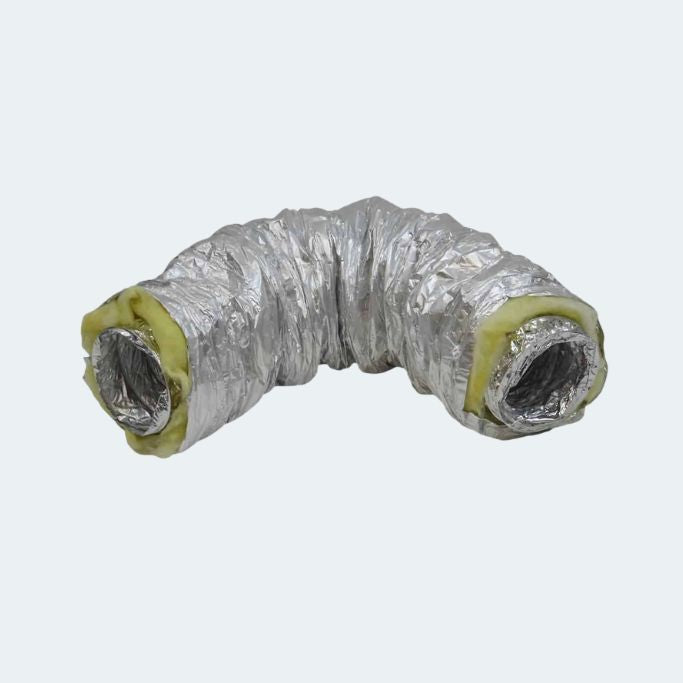
Insulated Aluminium Flexible Ducting
Mandatory wherever the run crosses a loft or any unheated void, and strongly advisable on any chilled supply. Cold duct in warm air is how you get water on a ceiling that nobody can explain.
- Sizes Six diameters
- Use for Cold supply air and unheated voids
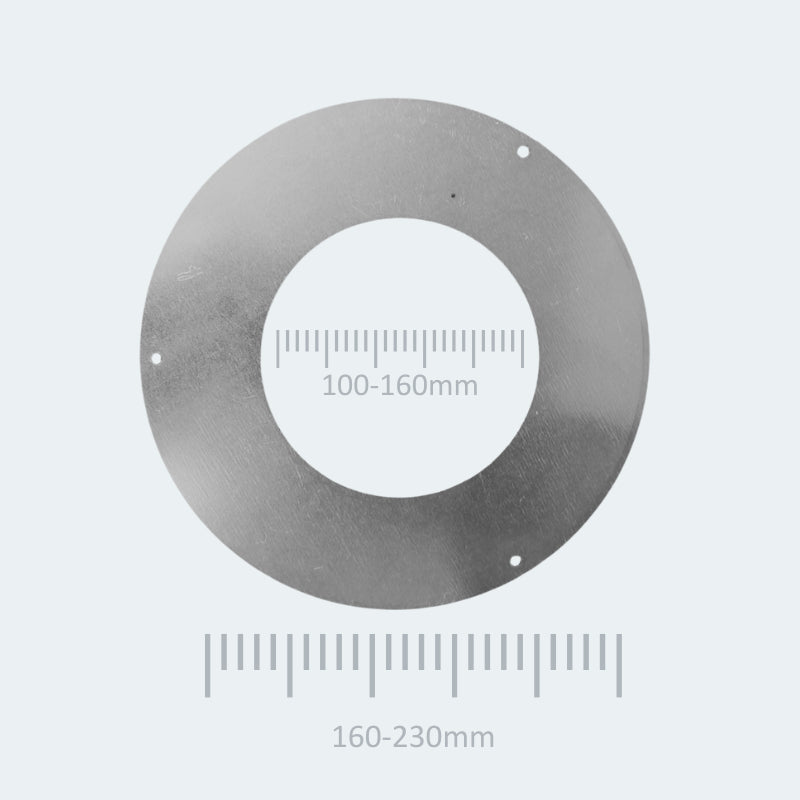
Round Metal Flange, Pre-Drilled
A repeatable, square spigot fixing to plenums and ceiling boxes, in seven sizes. Worth having on any job where the same detail repeats across dozens of terminals and marking out by hand is where the time goes.
- Sizes Seven, 190 mm to 100 mm
- Warranty 5 years
Running a slot rather than a circle? The Acoustic Box and Thermo Box plenums serve the linear range, and the full set is in plenum boxes.
Where a Coanda diffuser earns its place
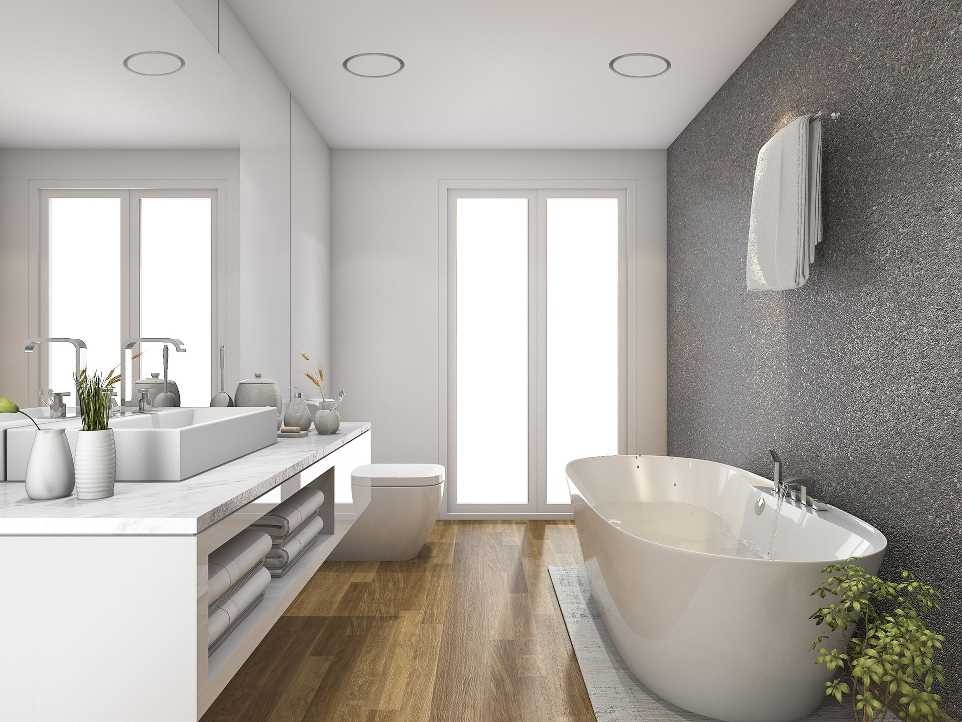
- Bedrooms. The single strongest case. People are stationary for eight hours directly under the ceiling, and a vertical jet at 3 a.m. is the complaint that gets the system turned off.
- Hotel rooms. Same argument, plus the terminal disappears into the design and the acoustic performance protects the room rating.
- Living rooms on comfort cooling. Where chilled air would otherwise land on a sofa, the Coanda pattern gives it the ceiling to temper against first.
- Offices with fixed desks. Desk positions rarely move after fit-out, so a diffuser that does not blow on anybody is worth more than one that can be re-aimed.
- Treatment and consulting rooms. Still occupants, low tolerance for draught, and a strong reason to keep the ceiling plane clean.
- Colour-drenched and period interiors. A paintable gypsum body is the only terminal that genuinely disappears into a strong ceiling colour or an ornate plaster field.
The rest of the Coanda range
The circle is one shape. The same airflow principle runs through the architectural range, so you can hold one air pattern across an entire project while changing the geometry to suit each room.
| If the room needs | Specify |
|---|---|
| A single discreet point in a plain ceiling | Performance Circle — Coanda, 100–200 mm |
| The same, on a rectilinear ceiling grid | Square Diffuser — 100 and 125 mm |
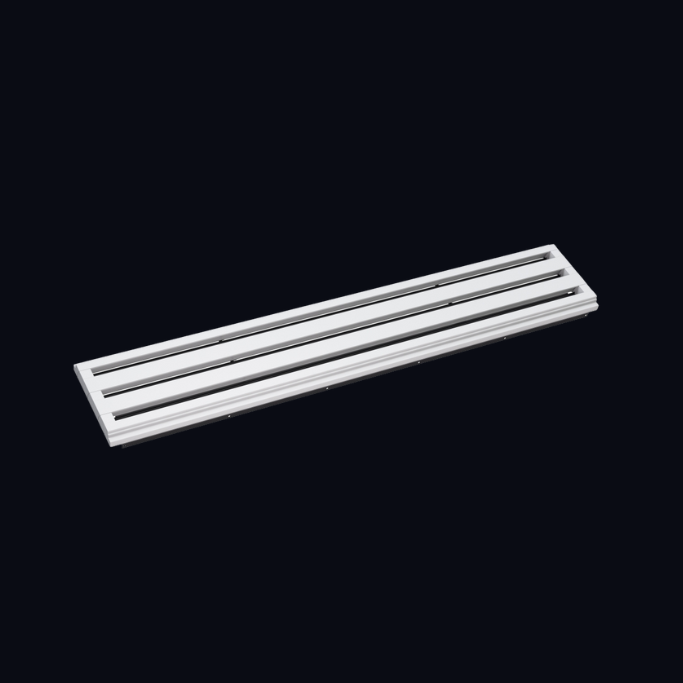
| A continuous architectural line | PLINE — 20 mm Coanda slot, also a Red Dot winner |
| A line at lower duty, or longer runs | LINE — 18 mm slot, joins end to end |
| Wall mounting, no ceiling void | Side Round or Side Square — Coanda along the wall |
| A decorative or return-air opening | ART frameless grilles — three patterns, three sizes |
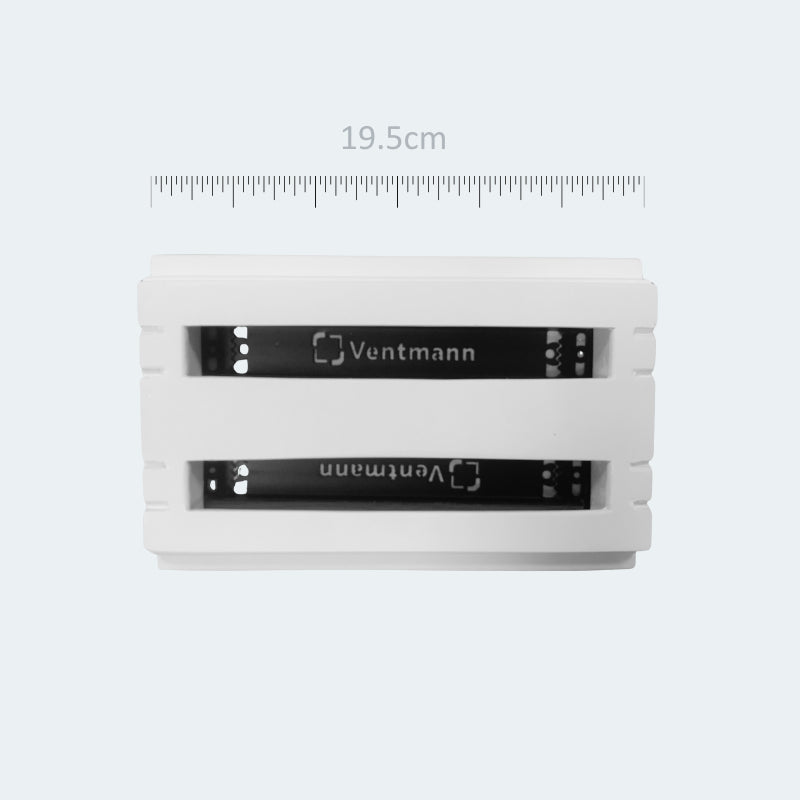
Order a sample first
The argument about whether a frameless gypsum terminal really vanishes into a ceiling is settled in about four seconds by holding one. Worth doing before a specification goes to a client.
- Use for Finish approval and client presentations
Frequently asked questions
What is a Coanda air diffuser?
A diffuser shaped so the supply air attaches to the surface it is mounted in and travels along it, rather than being thrown out into the room. The result is wider distribution from one terminal and almost no perceptible air movement directly underneath.
Is the Coanda effect better than a normal ceiling diffuser?
Better in rooms where people stay still — bedrooms, hotel rooms, offices, treatment rooms — because nobody sits in the airstream and cooling air tempers before it descends. A conventional downward-throw diffuser is still the right choice for corridors, lobbies and tall spaces where you want air driven down into the volume.
Can you paint a gypsum air diffuser?
Yes, and you are meant to. Units are supplied white and take standard emulsion or spray paint once installed, so the diffuser finishes in the same colour and sheen as the ceiling around it.
What size cut-out does the Performance Circle need?
The body diameter plus approximately 10 mm — the A + 1 cm dimension on the installation drawing. Take the body diameter from the product drawing for your spigot size; it is not the same as the duct diameter.
Which spigot size should I choose?
It follows the flow rate the room needs, not the room's size. Bedrooms and bathrooms on MVHR branches are usually 100 or 125 mm; living rooms and open-plan spaces on cooling are usually 160 or 200 mm, and the two-slot version where the duty per terminal is higher. Send us the plans and we will size it.
Will it work on my system?
If it is ducted — MVHR, MEV, ducted air conditioning or ventilated heating — yes, for both supply and extract, heating and cooling, provided it is sized for the flow rate.
Is a Coanda diffuser quieter?
A profile that lets the airstream turn gradually and stay attached generates less turbulence than one that forces a sharp change of direction through a restricted face, so at the same flow rate it generally runs quieter. Noise is still a system property: balance in the duct, not at the terminal, and use acoustic ducting on the final run into quiet rooms.
Does it come with a warranty?
Ventmann architectural diffusers carry a 5-year warranty.
Not sure which terminal you need?
Send us your floor plan and we will run the airflow calculations, size every diffuser, plenum and damper, and get the kit to you with next-day UK delivery — free.
Call 01283 240025 · Email sales@ventmann.co.uk
Shop Performance CircleGet Free Airflow Calculations